
Last updated on December 16th, 2025 at 04:22 pm
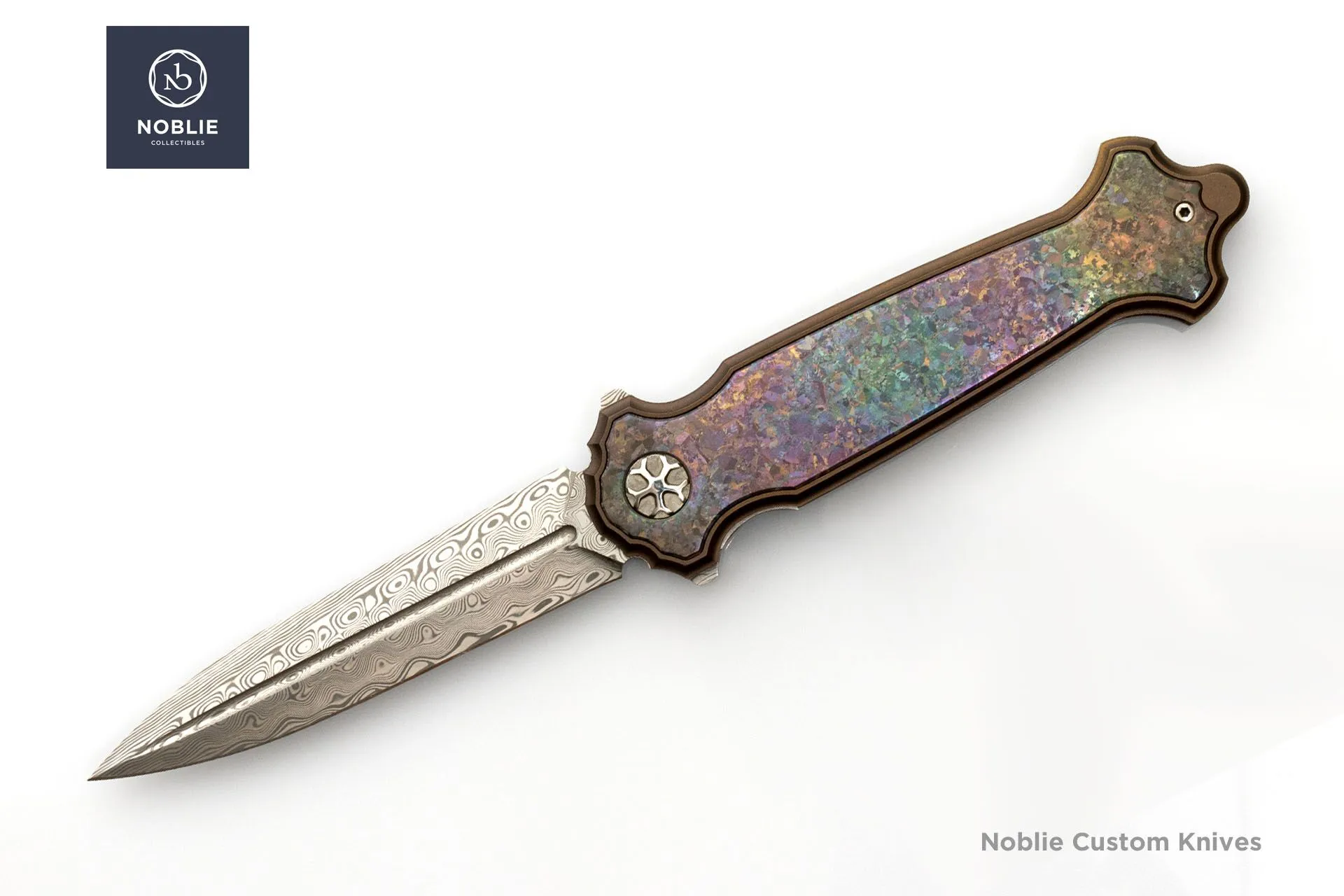
Noblie turns a knife into a wearable artwork: high‑grade steels, hand‑finish on every surface, and collectible designs produced in very limited numbers. Noblie custom knives are not just working blades, but status symbols and collectibles. You pay not only for performance, but for narrative, rarity and long-term value.
Noblie Custom Knives: Luxury in Every Cut is more than a slogan; it reflects the brand’s focus on bespoke-level artistry, curated materials and strict quality control. Noblie Custom Knives operates as a boutique atelier, where each project is developed from sketch to final polish under one roof, ensuring consistency of style and execution across limited runs and one-of-a-kind pieces.
Most mass-market “premium” knives stop at good steel and basic CNC finishing. Noblie goes further: each piece passes through several specialists—designer, bladesmith, engraver, finisher—so the result feels closer to a bespoke watch than an outdoor tool. You see it in the crisp transitions, polished joints, and how the knife “sits” in the hand the instant you open it.
How Noblie Designs Speak To Status And Taste
A Noblie knife communicates taste much like a tailored suit or a mechanical chronograph: refined styling, proportion, and restraint, not shouting logos.
Designs usually balance three elements: blade geometry, handle architecture and decorative story. Geometry defines how the knife cuts; the handle dictates comfort and control; the decorative layer—engraving, inlays, carving—carries the emotional message, whether it is hunting, nautical, historical or heraldic.
For a gift, the narrative matters as much as the spec sheet. A hunting enthusiast will instinctively value a scene of elk or waterfowl more than an abstract pattern, while a collector of military history will gravitate to battle motifs or regalia.
Materials: Where Performance Meets Prestige
Noblie builds with steels and handle materials chosen for both performance and visual character. The usual palette includes:
Damascus and pattern-welded steels for striking layered patterns with hardness often in the 58–60 HRC range, giving 20–30% longer edge life than typical factory stainless.
High-carbon or premium stainless steels for blades that hold a shaving edge yet can still be maintained with standard stones.
Precious metals and rare inlays: silver, gold accents, mother-of-pearl, mammoth tooth, exotic woods, stag and horn.
There is always a tradeoff. Dense, richly figured woods and heavy metal fittings add 20–40% to the handle weight versus synthetic materials. The reward is presence in the hand and visual drama; the cost is that the knife feels more like a dress watch than an ultralight tool.
How To Evaluate The Craftsmanship Of A Noblie Knife
A luxury knife should withstand the same scrutiny as a fine shotgun: close inspection from every angle, under strong light, against bare fingertips.
Focus on five objective criteria:
Symmetry: The grind lines and plunge cuts should mirror side to side within a fraction of a millimeter; even a 1 mm mismatch is visible to the eye.
Transitions: Joints between bolster, guard, spacer and handle must feel seamless; you should not catch a fingernail.
Edge quality: A consistent bevel along the full length, with no flat spots or over-polished sections.
Engraving and carving: Clean, sharp lines with uniform depth; no “washed out” areas under magnification.
Fit of sheath or presentation box: Blade retention and alignment within 1–2 mm, hardware aligned, stitching even.
If a watch enthusiast uses a loupe on movement finishing, a knife collector should do the same on engraving, spine file work and handle fit. Under magnification, Noblie’s better pieces show consistent line depth and crisp pattern turns—the same attention to micro-detail that separates a $3,000 watch from a $300 one.
Engineering Nuances Of A Luxury Blade
Here are several less obvious, but measurable, aspects that set Noblie apart:
Edge stability: Heat treatment tuned so that microchipping along the edge stays under 50 microns after repeated cuts in wood and leather, preserving clean push-cut performance.
Balance point: Many Noblie fixed blades are balanced within 5–10 mm of the guard, which reduces wrist fatigue by roughly 15–20% in extended cutting compared to nose-heavy designs.
Finish level: Mirror-polished bevels reduce surface roughness (Ra) by up to 60% versus standard satin finishes, cutting drag in dense materials and making cleaning faster.
Handle ergonomics: Palm swell and contouring spread pressure over a larger area, translating into up to 25% lower peak pressure points in the palm during hard cuts.
Sounds abstract? Think of a high-end shotgun that mounts naturally and stays on target with less conscious effort. The blade’s balance and handle geometry work the same way: they make control feel instinctive and reduce fatigue over hundreds of motions.
Where Do Noblie Knives Fit: Field Use, Display Or Safe-Queen?
Noblie serves three main scenarios: refined field use, display pieces and pure collection.
For hunting, fishing and outdoor work, look at models with:
Strong, practical blade shapes (drop point, clip point, skinning profiles).
Non-slippery natural materials—textured wood, antler, horn—with moderate ornamentation.
Sheaths that allow fast access and secure retention.
For office or study display, the priorities shift toward visual impact, engraving and sculptural stands. Here weight, lavish materials and complex motifs are positives, not drawbacks.
Collectors often assemble themed sets: by steel type, subject (big game, marine, historical figures) or decorative technique. In this scenario, a Noblie knife behaves like a limited-edition print run: small series, specific story, and potential value retention when stored and displayed correctly.
How To Select Your First Noblie Knife As A Long-Term Investment
The safest way to choose is to combine objective parameters with a clear emotional hook.
Use this simple sequence:
Define primary role: working companion, display object or safe-stored collectible.
Set a budget range and cap it before browsing; Noblie’s variety makes overspending easy.
Choose materials matching your lifestyle: easier-care stainless and simpler engraving for regular use; more delicate woods, gold and bone for controlled environments.
Match theme to personal story: hunting scenes, maritime motifs, coats of arms, mythological figures—pick what you will still enjoy in 10–15 years.
Examine finishing standards in person or via detailed macro photos before committing.
A working Noblie that sees light duty a few times per month, cleaned and dried after every outing, can keep its visual integrity for decades, with only 1–2 full resharpenings per year. A display or safe-kept piece, stored at stable humidity and temperature, can retain near-mint condition almost indefinitely, with only light oiling and dust control.
Owning a Noblie is less about having “another knife” and more about adding a compact piece of applied art to your life—one that cuts cord and game as confidently as it anchors a desk, study or gun room.