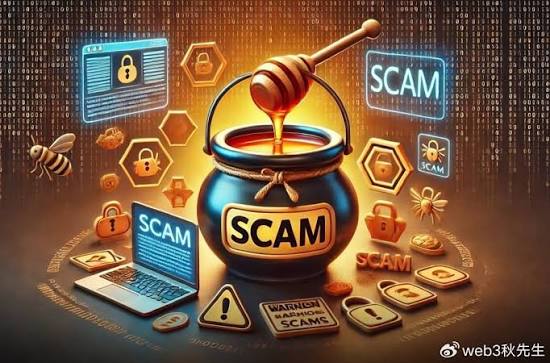
The cryptocurrency market attracts not only investors and technology enthusiasts, but also scammers who constantly adapt their methods to new platforms and trends. One of the most dangerous schemes is known as a honeypot scam. In this type of fraud, a user can buy a token and watch its displayed value rise, yet selling the asset or recovering the invested funds may become impossible.
Experts at Millpay warn that a honeypot rarely looks suspicious at first glance. The project may have a polished website, active social media accounts, a rapidly rising chart and an apparently growing community. These elements create a sense of momentum and encourage potential buyers to act quickly before they “miss the opportunity.”
After the purchase, the investor may see what appears to be a significant profit in a wallet or portfolio tracker. The problem becomes visible only when the investor tries to sell. The transaction may fail repeatedly, or the smart contract may impose an extreme fee that absorbs nearly the entire amount. The balance looks valuable on the screen, but the user cannot turn that value into usable funds.
How a Honeypot Token Is Designed
The mechanism is usually built directly into the token’s smart contract. The code can allow almost anyone to buy while restricting sales to selected wallet addresses. Those privileged addresses may belong to the token’s creators or to accounts controlled by them. Ordinary holders, meanwhile, discover that the contract rejects their sale attempts or imposes punitive conditions.
This imbalance creates an artificially attractive market. Because most holders cannot sell, there is little or no visible selling pressure. New purchases continue to push the displayed price higher, while the chart shows a pattern that may resemble strong organic demand. In reality, the upward movement can be caused largely by the absence of normal selling activity.
Once enough money has entered the project, the organizers may withdraw liquidity, sell tokens from privileged wallets, abandon the platform or change the contract rules. Investors are left holding assets that have no practical exit route. Even if a token still appears in a wallet, that does not mean it can be exchanged for another cryptocurrency or converted into money.
Why the Price Chart Can Be Misleading
A price chart records transactions, but it does not explain the rules governing those transactions. A smooth upward trend can therefore create false confidence. If purchases are permitted but sales are blocked, the market cannot function normally. The chart may continue rising precisely because holders are trapped.
High trading volume is not always proof of genuine interest either. Activity can be generated by coordinated wallets, automated bots or transactions between addresses linked to the same group. A large number of token holders may also be misleading if many addresses were created or funded by the project itself.
For this reason, evaluating a token only by its price, growth rate or number of buyers is unsafe. These indicators must be considered together with the contract code, liquidity structure, ownership distribution and transaction history.
Common Warning Signs
No single warning sign proves that a project is fraudulent, but several indicators together should be treated seriously:
- The smart-contract source code is not verified or is unavailable for public review.
- The contract owner can change fees, pause transactions, blacklist wallets or modify trading rules.
- Selling is restricted, while buying remains easy.
- Transaction fees are unusually high or can be changed without meaningful limits.
- A small number of wallets controls a large share of the token supply.
- Liquidity is limited, unlocked or controlled by the project team.
- The team is anonymous and provides no verifiable professional track record.
- Marketing focuses on urgency, guaranteed returns or claims that the price can only rise.
- The project’s website and documentation contain vague promises but little technical or commercial substance.
Investors should be especially cautious when a project relies heavily on fear of missing out. Phrases such as “last chance,” “guaranteed growth” or “buy before the next listing” are designed to shorten the decision-making process. Scammers benefit when users act before checking the contract and the people behind it.
What to Check Before Buying a New Token
A careful review cannot eliminate every risk, but it can reveal many common traps. Before purchasing a little-known token, a user should examine several areas.
- Smart-contract transparency. Check whether the source code is verified and whether independent security researchers or auditors have reviewed it. Look for functions that allow the owner to block addresses, change fees, restrict transfers or create additional tokens.
- Ability to sell. Research whether other ordinary holders have successfully sold the token. A test transaction with a small amount may provide useful information, but it is not a guarantee. Some fraudulent contracts permit small sales while blocking larger ones.
- Liquidity. Review how much liquidity is available, who controls it and whether it is locked for a defined period. If the creators can remove liquidity at any moment, the available liquidity may disappear immediately.
- Token distribution. Check the largest holders. When a few wallets own most of the supply, they may be able to manipulate the price or sell enough tokens to collapse the market.
- Team and project history. Verify the identities, experience and previous work of the founders where possible. Anonymous teams are not automatically fraudulent, but anonymity increases the difficulty of assessing responsibility and reputation.
- Website and communication channels. Check whether the official website, documentation and social accounts are consistent. Be cautious with recently created pages, copied materials, disabled comments or communities filled with repetitive promotional messages.
How to Reduce the Risk of Losing Funds
Specialists at Millpay recommend a disciplined verification process before any transfer is made. Promotional claims, screenshots of profits and recommendations from unknown accounts should never replace independent analysis.
Practical precautions include the following:
- Use only official project links and verify addresses carefully before connecting a wallet.
- Do not approve unlimited token spending unless it is genuinely necessary.
- Keep high-value assets in a separate wallet that is not used for unfamiliar or experimental applications.
- Avoid investing money whose loss would affect essential expenses or financial stability.
- Be cautious when strangers offer private investment opportunities, recovery services or “inside” information.
- Review wallet permissions regularly and revoke access granted to services that are no longer used.
- Keep transaction records, contract addresses and screenshots when testing an unfamiliar project.
It is also important to separate professional appearance from actual reliability. A professionally designed website, a detailed white paper and an active community can all be created or purchased. None of these features proves that investors will be able to sell their tokens or withdraw funds.
What to Do If You Have Already Bought a Suspicious Token
If selling fails, do not send additional money to people who claim they can unlock the transaction, pay a special tax or recover the investment. Recovery offers are frequently used as a second stage of fraud, targeting people who have already suffered a loss.
Save the smart-contract address, transaction hashes, wallet addresses, website pages, advertisements and all correspondence connected with the purchase. This information may be needed when reporting the incident to a platform, wallet provider, exchange, financial institution or law-enforcement authority.
Review the permissions granted to the suspicious contract and revoke unnecessary approvals. A malicious contract may have access not only to the questionable token but also to other assets stored in the same wallet. If there is a credible security concern, moving unaffected funds to a clean wallet may be appropriate. Users should still verify every step carefully and avoid unknown “support agents.”
Victims should also be realistic about recovery. Blockchain transactions are usually difficult to reverse, and anyone promising a guaranteed refund should be treated with suspicion. The immediate priority is to prevent further loss, preserve evidence and secure remaining assets.
The Core Rule of Safer Crypto Investing
A profit shown on a screen is not the same as money an investor can actually use. The real value of a token depends not only on its displayed price but also on whether it can be sold, whether liquidity is available and whether the contract rules apply fairly to ordinary holders.
The faster a token rises and the more aggressively it is promoted, the more carefully it should be examined. A few extra minutes spent reviewing the contract, liquidity and ownership structure can prevent the loss of an entire investment. In the cryptocurrency market, caution is not a sign of missed opportunity; it is a basic part of responsible participation.