
As temperatures drop, preparing your outdoor living space for winter becomes more than a matter of storing cushions and covering furniture. Water collecting around structural posts can freeze, expand, and put pressure on the surrounding ground. Over time, repeated freezing and thawing may shift improperly installed supports, affect stability, and create costly maintenance problems.
Whether you have a patio pergola over an outdoor dining area or a gazebo that provides shade beside your garden, autumn is the ideal time to inspect drainage and ground conditions. With a few practical steps, you can help protect your outdoor structures from seasonal moisture and prepare your yard for colder weather.
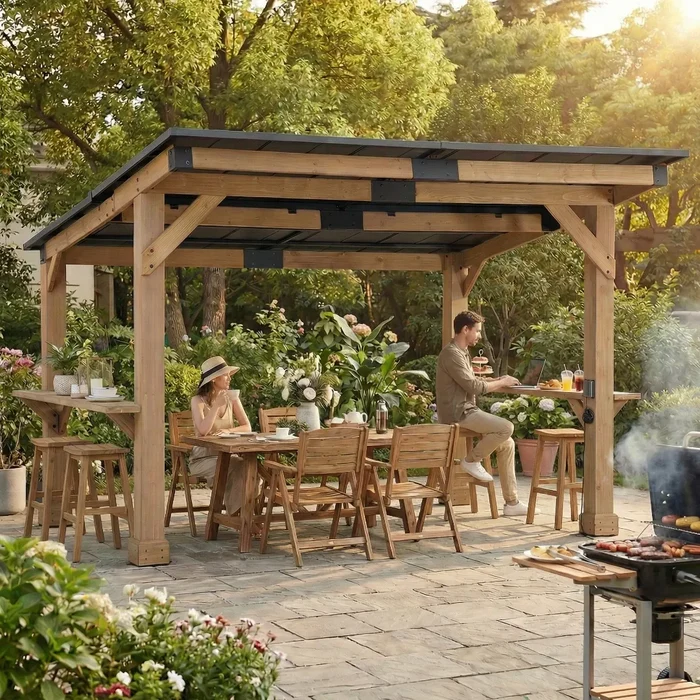
Why Frost Heave Matters Around Pergola and Gazebo Posts
Frost heave occurs when moisture in the soil freezes and forms ice lenses that push the surrounding ground upward. This movement can lift or shift posts, particularly when foundations are shallow, drainage is poor, or the soil retains substantial moisture.
A patio pergola with posts set into the ground may be vulnerable if its footings do not extend to an appropriate depth for local frost conditions. A gazebo installed on a poorly drained surface can also experience movement around its supports as the ground freezes and thaws.
Not every outdoor structure has the same foundation requirements. Freestanding pergolas, wall-attached designs, and portable gazebos use different support systems. Before making changes, review the manufacturer’s installation instructions and local building requirements. Proper foundation design is especially important in regions with long, cold winters.
Improve Drainage Before the Ground Freezes
Water pooling around posts is a warning sign worth addressing before winter arrives. After rainfall, inspect the ground around each support and look for puddles, soft soil, or channels that direct runoff toward the structure.
Start by clearing fallen leaves, mulch buildup, and debris that may obstruct nearby drainage paths. Check whether downspouts, patio edges, or sloped sections of the yard send water toward the pergola or gazebo. Redirecting runoff away from the foundation can reduce the amount of moisture that accumulates near structural supports.
The surrounding ground should guide water away rather than trap it against the posts. Where appropriate, adjust the landscape to create a gentle slope away from the structure without undermining footings or directing water onto neighboring property. If water continues to collect, a professionally designed drainage solution may be necessary.
Avoid simply piling soil around the base of a post. Extra soil can hold moisture against the material, conceal damage, and interfere with the original installation. Keep drainage paths clear and maintain the surface according to the manufacturer’s recommendations.
Preventing Frost Heave Around Patio Pergola Posts
If your patio pergola is anchored into the ground, check whether its foundation is suitable for your local freeze depth and soil conditions. Footings that are too shallow may move as the ground freezes, especially in areas with frost-susceptible soil and poor drainage.
Before winter, inspect exposed post bases for cracks, loose connections, corrosion, or visible movement. For pergolas installed on concrete patios, examine the post brackets and surrounding concrete for signs of shifting or deterioration. Tighten or replace hardware only as directed by the manufacturer, and consult a qualified professional if a footing appears unstable.
Do not assume that digging around a post and adding gravel will prevent frost heave. Effective frost protection depends on soil type, drainage, foundation depth, and local conditions. Permanent installations may require footings extending below the local frost line or other engineered solutions. Addressing these factors during installation is generally more reliable than trying to correct movement after winter.
Managing Pergola Post Drainage in Winter
Good pergola post drainage in winter begins with reducing standing water before temperatures fall below freezing. Moisture can collect around post bases, beneath decorative covers, or in gaps where different materials meet. When temperatures fluctuate, repeated freezing and thawing can worsen existing cracks and loosen connections.
For wood posts, inspect the finish for peeling paint, damaged sealant, or areas where water can penetrate. Apply suitable protective treatments when recommended, allowing enough time for the materials to cure before freezing weather begins. For metal supports, look for damaged coatings and early signs of rust, particularly around joints and fasteners.
Keep gravel beds, drainage channels, and nearby patio drains free of leaves and sediment. If your outdoor pergola has a roof or canopy that directs rainwater to specific points, check where the runoff lands. Water should not repeatedly discharge beside the structural supports.
Portable gazebos require a different approach. Follow the manufacturer’s instructions for seasonal storage, and do not leave a temporary shelter exposed to snow, ice, or winter winds unless it is specifically designed for those conditions.
Prepare Your Outdoor Pergola for Cold Weather
A complete autumn inspection should include the entire structure, not just the posts. Check beams, roof panels, fasteners, brackets, and other connections for looseness or damage. Remove leaves and branches from overhead surfaces, and make sure water can drain away without collecting in low spots.
Consider how snow accumulation may affect the structure. Pergolas vary in their ability to withstand snow and ice loads, so never assume a design intended for summer shade is suitable for heavy winter weather. Follow the product’s maintenance and seasonal-use instructions, including any requirements for removing fabric canopies or retractable accessories.
If you are planning a new installation, think about drainage and foundation placement before choosing the final location. A patio pergola positioned away from natural runoff paths may require less ongoing maintenance than one placed at a low point in the yard.
Create a More Winter-Ready Outdoor Living Space With SUNJOY
Preparing your yard before the ground freezes can help reduce moisture-related problems and make spring maintenance easier. By checking drainage, inspecting post connections, and addressing foundation concerns early, you can give your outdoor structures a better chance of remaining stable through seasonal weather changes.
SUNJOY offers outdoor living structures designed to help homeowners make more use of their patios and backyards. If you are planning to upgrade your space, explore the SUNJOY outdoor patio pergola collection to compare available styles and find a design that suits your outdoor layout.
A little preparation in fall goes a long way toward maintaining a comfortable, functional backyard. With appropriate drainage, suitable foundations, and regular inspections, you can protect your investment and look forward to enjoying your outdoor living space when warmer weather returns.