
Managing large-scale infectious disease screening presents significant logistical hurdles for reference laboratories during acute public health events. Implementing automated monkeypox PCR testing platforms helps clinical facilities streamline high-volume specimen workflows effectively. Facility directors increasingly turn to advanced instrumentation to modernize diagnostic capabilities.
Operational Demands in High-Throughput Diagnostic Facilities
Modern clinical reference laboratories face persistent operational challenges during infectious disease outbreaks requiring rapid, large-scale clinical screening procedures. Managing high-volume specimen influx demands robust infrastructure capable of maintaining diagnostic accuracy without sacrificing turnaround speed. Equipment scalability dictates whether regional health facilities successfully isolate viral pathogens during acute transmission surges.
Diagnostic directors evaluating modernization strategies frequently look toward automated monkeypox PCR testing platforms to streamline daily laboratory workloads. Minimizing manual intervention steps reduces operator fatigue and lowers the risk of human error during high-throughput testing cycles. Enhanced system automation ensures consistent pipetting and extraction efficiency across multi-sample runs.
Laboratories handling complex zoonotic threats require reliable instrumentation that integrates seamlessly into existing molecular laboratory workflows. Scalable hardware configurations empower facility managers to expand testing capacity dynamically in response to shifting public health demands. Operational efficiency directly influences institutional preparedness against emerging viral outbreaks globally.
Decentralized medical centers and large reference hospitals must coordinate reagent inventories and equipment maintenance to avoid unexpected testing delays. Maintaining high operational readiness requires close cooperation between laboratory personnel and administrative procurement committees. Strategic planning prevents operational bottlenecks during seasonal viral escalations and public health emergencies.
Accelerating Turnaround Times Through Advanced Amplification
Reducing assay completion times remains a primary objective for reference laboratories managing time-sensitive clinical specimens. Traditional amplification protocols often create testing bottlenecks that delay critical reporting cycles for attending physicians. Implementing fast thermal cycling procedures transforms operational schedules by delivering results within condensed timeframes.
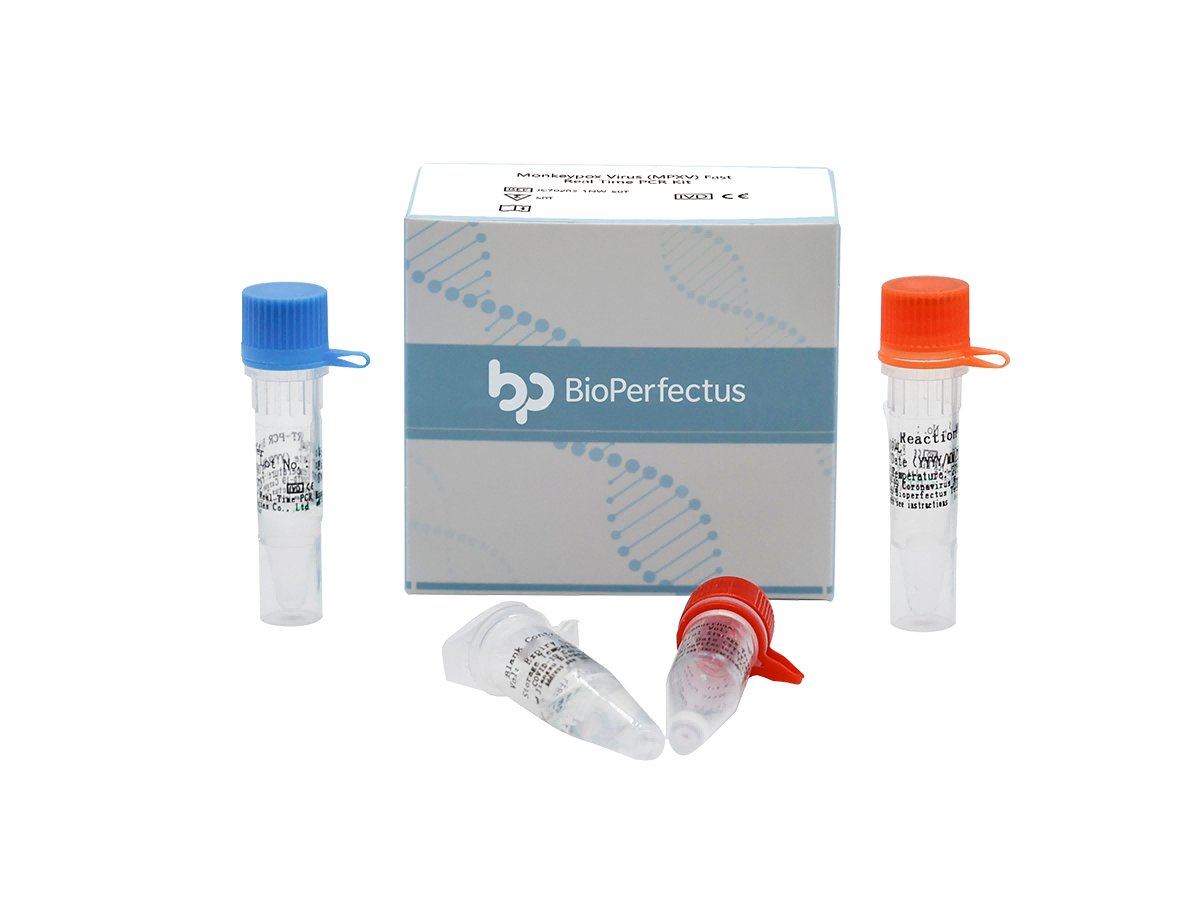
The Monkeypox Virus (MPXV) Fast Real-Time PCR Kit provides a professional monkeypox test designed for qualitative detection of viral nucleic acids. Utilizing hydrolysis probe technology, this assay enables rapid amplification within thirty minutes on compatible real-time thermal cyclers. Speed does not compromise analytical reliability, ensuring high-confidence outputs for urgent diagnostic workflows.
Engineering teams at BioPerfectus design high-performance reagents optimized for rapid thermal profiles without sacrificing fluorescence signal intensity. Such optimizations allow high-volume laboratories to process up to ninety-six reactions simultaneously during demanding operational shifts. Rapid turnaround empowers clinical teams to enact prompt patient isolation measures swiftly.
Thermal cycler compatibility is another critical parameter when evaluating reagent kits for fast diagnostic workflows. Instruments supporting open or closed real-time configurations allow facilities to maximize existing equipment investments. Operational flexibility reduces capital expenditures while maintaining strict adherence to clinical performance benchmarks across departments.
Multiplex Target Accuracy and Clinical Specimen Versatility
Analytical precision depends heavily on sophisticated assay design capable of mitigating false-negative results during early infection phases. Incorporating two distinct genetic targets within a single reaction tube ensures robust detection performance across diverse viral lineages. Dual-gene targeting provides internal cross-verification that strengthens overall diagnostic confidence.
Clinical presentations often dictate varied specimen collection methods depending on lesion progression and symptom severity. Supported sample matrices include human tonsillar swabs, nasopharyngeal swabs, serum, whole blood, lesion exudate, and scabs. Having broad matrix compatibility gives laboratory technicians flexibility when processing challenging clinical submissions.
Selecting a flexible monkeypox test allows diagnostic facilities to adapt seamlessly to shifting clinical guidelines and patient sampling protocols. Reagents accommodating multiple specimen types eliminate the need for separate assay kits, simplifying inventory management. Standardization reduces training overhead and lowers operational costs across regional testing networks.
Strict limit-of-detection standards ensure that low-titer biological specimens are correctly identified before disease progression occurs. Achieving high sensitivity at low target concentrations protects public health networks against undetected viral transmission chains. Reliable detection capabilities remain essential for effective epidemiological containment strategies worldwide.
Workflow Integration and Laboratory Quality Assurance
Internal quality control mechanisms are vital for validating every procedural step from nucleic acid extraction to final amplification. Built-in control systems monitor reaction performance to detect potential inhibitors present within complex biological matrices. Reliable internal monitoring safeguards laboratory outputs against invalid reporting errors.
Integrating automated monkeypox PCR testing platforms with validated assays streamlines data analysis through intelligent software modules. Technicians review standardized amplification curves with minimal manual intervention, enhancing overall laboratory productivity during peak seasons. Software automation standardizes result interpretation across decentralized testing sites.
Supply Chain Reliability and Regulatory Assurance
Maintaining consistent reagent supply chains and rigorous quality benchmarks remains essential for sustaining long-term institutional readiness. BioPerfectus delivers comprehensive diagnostic solutions backed by strict regulatory standards and international certifications. Strategic procurement partnerships ensure uninterrupted operational continuity for healthcare facilities globally.
Advanced automated monkeypox PCR testing platforms represent a significant technological advancement for modern molecular diagnostic facilities. Pairing high-throughput instrumentation with reliable reagents ensures optimal clinical outcomes during public health emergencies. Continued innovation bridges the gap between complex virology and actionable patient management.
Strengthening Surveillance Against Emerging Orthopoxvirus Threats
Deploying a sensitive monkeypox test reinforces regional surveillance capabilities against emerging orthopoxvirus threats worldwide. Diagnostic excellence remains the cornerstone of effective infectious disease control and community protection strategies. Institutional investment in advanced molecular tools secures public health safety.
Collaborative efforts between kit manufacturers and clinical end-users drive continuous improvement in diagnostic assay performance. BioPerfectus maintains responsive technical support networks to assist laboratory personnel with local optimization and troubleshooting. Sustained technical collaboration guarantees long-term operational resilience for healthcare institutions.
Future Directions in Diagnostic Automation and Validation
Future diagnostic developments will continue focusing on workflow automation, reagent stability, and enhanced multiplexing capabilities. Molecular laboratories adopting these innovations position themselves at the forefront of global health security. Sustained excellence in assay engineering protects populations against unpredictable viral threats.
Comprehensive validation studies confirm that standardized molecular kits provide reproducible results essential for clinical decision-making. Adopting robust testing platforms empowers healthcare systems to maintain high standards of patient care during infectious disease crises.